

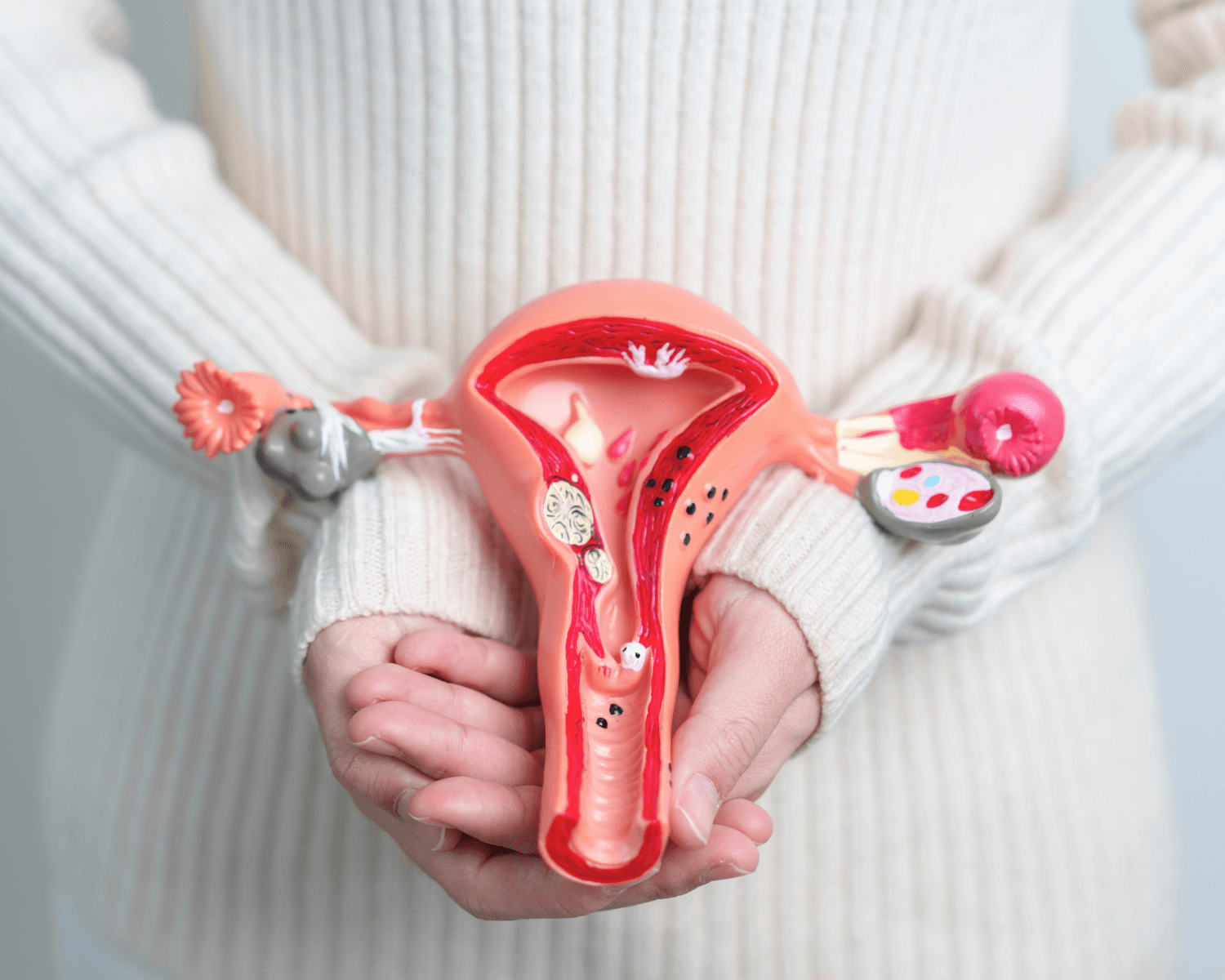
HyCoSy for Tubal Patency Assessment
If you think you require an fertility testing, a HyCoSy procedure is usually effective at diagnosing blockages in the fallopian tubes and other abnormalities of the ovaries and uterus.
Blockage of the fallopian tubes due to various causes including endometriosis and pelvic infection has long been known as a cause of infertility. Your fertility specialist can recommend a series of tests and examinations to confirm the cause of infertility, which may include a HyCoSy procedure.
Centre for Women’s Ultrasound is a leading centre for HyCoSy procedure in the Western, Southwest and Hills District since 2009. Our state of the art ultrasound equipment and experienced staff are available to organise the HyCoSy test for you in a safe and private environment by female staff.
What is tubal patency?
A test for tubal patency simply means testing the patency of the fallopian tubes. This is done as an outpatient ultrasound technique to visualise the flow through the fallopian tubes and determine tubal patency.
Here at the Centre for Women’s Ultrasound we provide a full pelvic ultrasound including imaging of the uterus and ovaries as well as any pathology in the pelvis prior to preceding with the HyCoSy. This special test is required as the examination of the fallopian tubes is not possible with general pelvic ultrasound.
What is a HyCoSy test?
Hysterosalpingo-contrast-sonography (HyCoSy) is a transvaginal outpatient ultrasound technique used to confirm tubal patency. To begin the test, a speculum will be inserted into the vagina to visualise the cervix, just like a pap smear. A catheter will then be inserted into the vagina, with a small balloon attached to the end which will be slowly enlarged to prevent any fluid leaking out of the cervix. The speculum will then be removed and the transvaginal ultrasound scan will begin, which will enable us to obtain a visual of the uterus. Saline will then be introduced into the cavity (the same way as in a sonohysterogram). During this part of the test problems such as polyps, submucous fibroids and uterine abnormalities may be identified. After this the saline will be infused into and observed to flow along the fallopian tubes. The bright echoes generated by air microbubbles in saline and colour Doppler imaging are used to confirm tubal patency. Patency is confirmed if this solution flows through the fallopian tubes, travelling to the area surrounding the ovaries.
Because of its convenience and safety, HyCoSy has increasingly been used in recent years in preference to other techniques in the investigation of tubal patency. HyCoSy also allows ultrasound examination of the other pelvic organs and can give valuable information regarding the reproductive organs.
How does HyCoSy compare to other methods of testing tubal patency?
Prior to the development of HyCoSy, hysterosalpingography (HSG) and laparoscopy with dye were used for routine investigation of tubal patency. These techniques are expensive, time-consuming and unpleasant for the patient as they involve surgery, general anaesthesia and hospitalisation.
HyCoSy Ultrasound Sydney
Common questions
Can't find your answer here? Our team is happy to help before your appointment.
The best time to have a dating scan is typically between 8 and 14 weeks of pregnancy. During this window, the fetus is developed enough to accurately measure its size and determine its age, which helps in estimating the due date with greater precision. This period also allows for the early detection of multiple pregnancies and ensures clear visualisation of fetal structures and the presence of a heartbeat. The dating scan provides essential information about the pregnancy’s progress, allowing healthcare providers to plan subsequent prenatal care and screening tests effectively. It’s important to adhere to this recommended time frame unless advised otherwise by your healthcare provider based on individual circumstances.
A dating scan is typically performed using ultrasound technology, where you lie on an examination table with your abdomen exposed. A warm gel is applied to your abdomen to aid in the transmission of sound waves. A handheld device called a transducer is then moved gently over your abdomen, emitting sound waves that bounce off structures inside your body, including the fetus and uterus. Real-time images of the uterus and fetus are displayed on a monitor, allowing the technician to measure the fetus to determine its size and age accurately. They also assess for the presence of a fetal heartbeat and check for any abnormalities or unusual features in the uterus. Throughout the scan, images may be captured for later review or as take-home copies for you. The procedure is non-invasive and generally well-tolerated, providing valuable information about the pregnancy’s progression and aiding in the estimation of the due date.
A dating scan provides essential information about the pregnancy’s progress and health. It accurately determines the gestational age by measuring the size of the fetus, which helps in estimating the due date. The scan confirms whether the pregnancy is single or multiple, checks for the presence of a fetal heartbeat to ensure viability, and assesses the uterus for any structural abnormalities that could impact the pregnancy. Early detection of such issues allows healthcare providers to plan appropriate prenatal care and additional tests as needed, ensuring the best possible outcome for both the mother and baby.
A referral from your GP or specialist is required to be eligible for a Medicare rebate. If you do not have a referral, our team can still assist you — please contact us to discuss your options before booking.
Yes — you will receive take-home copies of your baby's images so you can share this special moment with family and friends. Digital delivery options may also be available; please ask our team when booking.
For a dating scan, it is generally recommended to attend with a comfortably full bladder, as this can improve image quality for the abdominal scan. Bring your Medicare card, referral, and any previous imaging results. Our team will send you specific preparation instructions when your appointment is confirmed.