
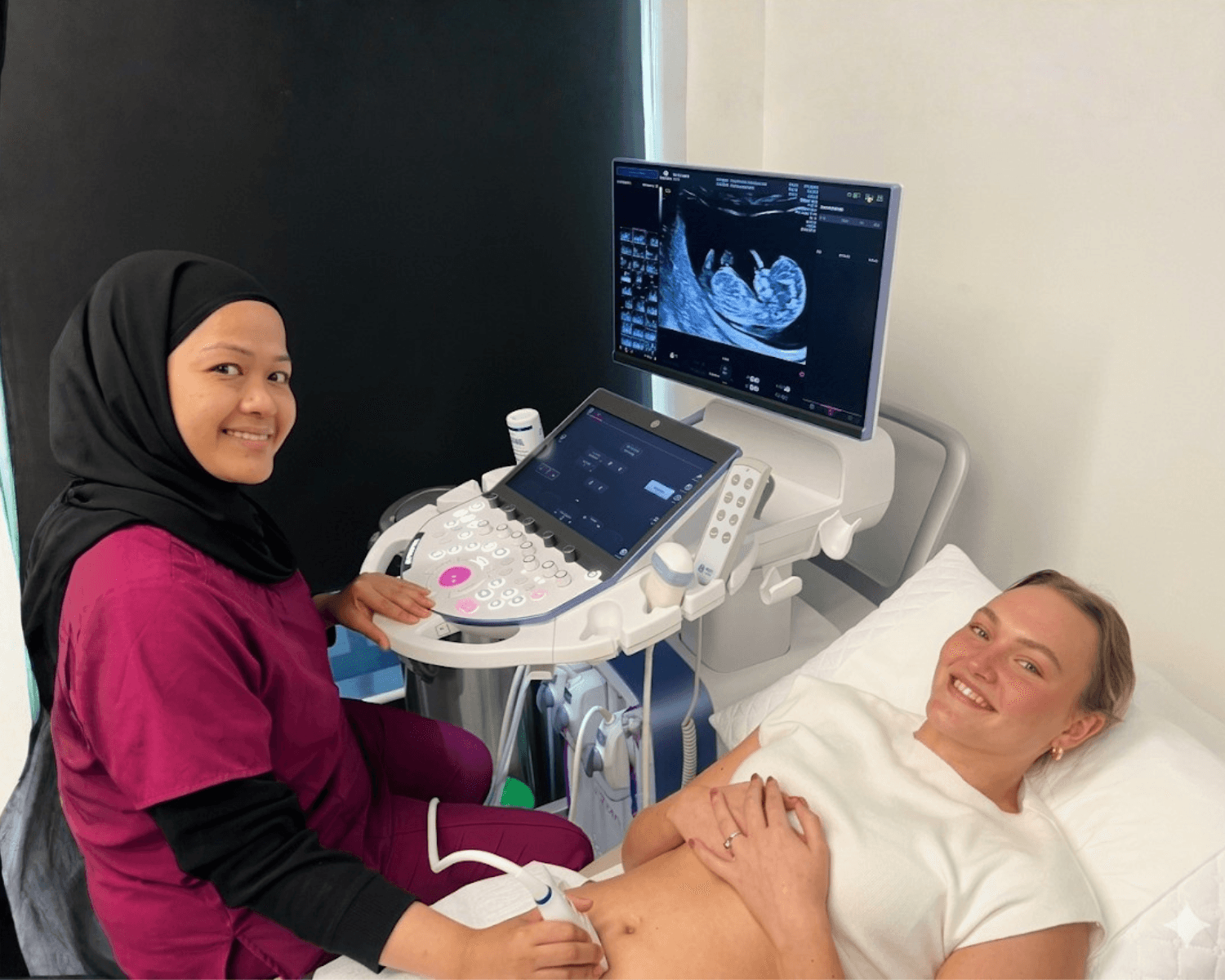
The Early Pregnancy Assessment Service (EPAS) at CFWU is dedicated to providing early pregnancy care for women experiencing complications such as pain, bleeding, or uncertainty in the early stages of pregnancy.
Our specialised team offers expert ultrasound assessments and guidance during this critical phase to ensure accurate diagnosis and optimal care.
Who Should Attend EPAS?
If you are in the early stages of pregnancy (usually up to 14 weeks) for routine pregnancy screening as well as experiencing any of the following symptoms, EPAS at CFWU can provide you with essential care:
- Vaginal bleeding or spotting
- Abdominal pain or cramping
- Concern over the viability of your pregnancy
- A history of previous pregnancy complications
These assessments include:
- Consultation for early Pregnancy
- Risk Assessment (including recommendations for asprin and pregnancy management plan)
- Dating Scan
- Miscarriage Management (Medical and Surgical)
- Non Invasive Prenatal Testing
- Nuchal Translucency Scans
- First Trimester Morphology Scan
- Preeclampsia Screening
- Preterm Birth Risk Assessment
- Carrier Screening
Consultation for Early Pregnancy
At CFWU, we offer comprehensive consultations for women in early pregnancy who may be experiencing symptoms such as bleeding, cramping, or other concerns. Our experienced specialists will discuss your medical history, symptoms, and any previous pregnancy complications to develop an individualised care plan. This consultation is the foundation of your early pregnancy care, guiding the next steps in monitoring your pregnancy’s health and progression.
Risk Assessment
A thorough risk assessment is conducted to identify potential health concerns for both you and your baby. This includes evaluating factors like your age, medical history, lifestyle, and previous pregnancies. Based on your risk profile, we provide guidance on necessary interventions or monitoring. For instance, aspirin may be recommended to reduce the risk of preeclampsia, particularly in women with a higher risk profile. Additionally, you’ll receive a personalised pregnancy management plan that outlines how we’ll address any risks identified.
Dating Scan
The dating scan is an ultrasound that helps determine the gestational age of the pregnancy and establish your due date. Performed between 6-12 weeks, it provides crucial information about the baby’s growth and development. This scan also checks for the presence of a heartbeat and assesses whether the pregnancy is progressing normally.
Miscarriage Management (Medical and Surgical)
If miscarriage is diagnosed, our team will offer compassionate support and a tailored management plan. Depending on your situation, you may be offered:
- Medical Management: This involves taking medication to help complete the miscarriage naturally. You will be closely monitored by our team to ensure safety and comfort.
- Surgical Management: If medical management is not appropriate or preferred, a surgical procedure may be necessary to remove pregnancy tissue. We collaborate with leading specialists to ensure the procedure is safe and minimally invasive.
Non-Invasive Prenatal Testing (NIPT)
CFWU offers Non-Invasive Prenatal Testing (NIPT), which is a simple blood test performed from 10 weeks of pregnancy. NIPT screens for chromosomal abnormalities, including Down syndrome (Trisomy 21), Edwards syndrome (Trisomy 18), and Patau syndrome (Trisomy 13). This test is highly accurate and safe for both mother and baby, providing peace of mind or early detection of potential genetic issues.
Nuchal Translucency Scans
The Nuchal Translucency (NT) scan is performed between 11 and 14 weeks of pregnancy. This ultrasound measures the fluid at the back of the baby’s neck to assess the risk of chromosomal conditions such as Down syndrome. Combined with blood tests, the NT scan is an important component of first-trimester screening.
First Trimester Morphology Scan
At CFWU, we offer a First Trimester Morphology Scan that takes place between 11 and 14 weeks of pregnancy. This detailed scan examines your baby’s development, focusing on the head, heart, abdomen, and limbs. It is essential for identifying structural abnormalities early, allowing for better planning and management of your pregnancy.
Preeclampsia Screening
Preeclampsia is a pregnancy-related condition that can lead to serious complications for both mother and baby. At CFWU, we conduct preeclampsia screening to assess your risk, particularly if you have a history of hypertension, previous preeclampsia, or other relevant factors. If you’re at risk, we may recommend treatments such as low-dose aspirin to reduce your chances of developing preeclampsia later in pregnancy.
Nuchal Translucency Scans
The Nuchal Translucency (NT) scan is performed between 11 and 14 weeks of pregnancy. This ultrasound measures the fluid at the back of the baby’s neck to assess the risk of chromosomal conditions such as Down syndrome. Combined with blood tests, the NT scan is an important component of first-trimester screening.
Preterm Birth Risk Assessment
CFWU offers Preterm Birth Risk Assessment as part of our early pregnancy care. We evaluate factors that may increase your risk of preterm birth, such as cervical length, previous preterm delivery, or certain medical conditions. Our goal is to provide proactive management to reduce the likelihood of preterm birth, including close monitoring and personalised recommendations for your pregnancy.
Carrier Screening
Carrier screening helps identify if you or your partner are carriers of genetic conditions that could be passed on to your baby. At CFWU, we offer Carrier Screening tests that screen for common inherited conditions, such as cystic fibrosis, spinal muscular atrophy, and fragile X syndrome. This is especially important if there is a family history of genetic disorders. The test involves a simple blood sample from you and your partner and helps you make informed decisions about your pregnancy.
Ongoing Care
The Nuchal Translucency (NT) scan is performed between 11 and 14 weeks of pregnancy. This ultrasound measures the fluid at the back of the baby’s neck to assess the risk of chromosomal conditions such as Down syndrome. Combined with blood tests, the NT scan is an important component of first-trimester screening.